How to Ensure High-Quality Commercial Printing for Your Brand
When marketing managers invest in printed materials - whether it’s a campaign, direct mail piece, signage, or executive collateral - the expectation is simple: high-quality commercial printing that reflects the brand perfectly.
But achieving truly high quality printed materials doesn’t happen by accident. The best results come from strong collaboration between the client and the printer, along with disciplined processes that eliminate uncertainty before production begins.
From years of experience producing commercial printing in Edmonton and across Canada, our team at Westkey Xibita has seen clear patterns in the projects that succeed - and the ones that struggle.
Below are practical steps customers can take to consistently achieve outstanding professional printing results.

Start With Properly Prepared Files
One of the biggest factors affecting high-quality commercial printing is file preparation. In the printing industry there’s a common phrase:
“Crap in, crap out.”
If the source files aren’t built correctly, printers must spend time fixing them - or the issues show up in the final product.
Well-prepared print files typically include:
Images at 300 DPI at final size
Proper bleeds and crop marks
Fonts outlined or packaged
All linked images included in the file package
No conflicting colour profiles embedded
A print-ready PDF or fully packaged design file (such as InDesign with links and fonts)
Experienced designers often send organized file packages containing everything required for production. Some even provide access to internal brand asset libraries, allowing printers to download approved logos, colour palettes, and design elements directly.
This eliminates version confusion and keeps production moving smoothly.
The result is less back-and-forth, fewer delays, and a faster path to high quality printed materials.
Understand That Materials Affect Print Quality
Great printing isn’t just about ink - it’s about materials and tactile experience.
Paper alone comes in several quality tiers:
Economy
Mid-range
Premium
Within those tiers are important variables such as:
Text weight vs. cover weight
Coatings
Brightness levels
Surface texture
All of these elements directly influence how a piece feels and how colours reproduce.
Since COVID, many paper mills have altered their manufacturing processes by using more short-grain fibers and lower-grade pulp, which has changed the performance and feel of many paper stocks. Understanding these differences is critical when producing high-quality commercial printing.
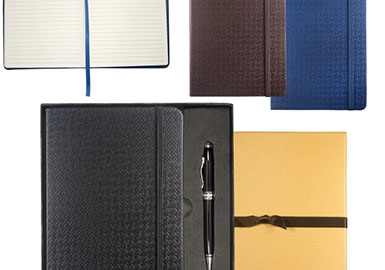
Case Example: Premium Executive Journals
While producing a custom executive journal for Western Financial Group, the goal was to create something that felt substantial and high-end.
Instead of selecting a standard cover stock, several paper options were tested. The final solution used two premium cover stocks mounted together, creating a double-thick cover.
The result was dramatic.
The heavier cover gave the journal the weight and presence expected in North American markets. A thinner stock would have completely changed how the piece was perceived.
Material choices are never cosmetic - they play a major role in delivering professional printing results.
Involve Your Printer Early in the Project
Many organizations only contact a printer after the design work is complete. While that can work, the best commercial printing outcomes happen when printers are involved earlier in the process.
An experienced commercial printer can help identify:
Production opportunities
Unique material options
Specialty finishing techniques
Cost-effective alternatives
Potential technical challenges
This collaboration often elevates a good design into something exceptional.
Case Example: Elevating a Thank-You Card
An agency once approached with a concept for a high-impact thank-you card. The original design called for standard printing with a basic varnish.
By involving the printer earlier in the process, the concept was enhanced by combining on-press varnish with spot UV coating, creating contrast and additional visual impact.
Although the upgrade increased the cost slightly, it delivered exactly the premium look the client wanted - and the card was reordered multiple times for future campaigns.
Early collaboration is one of the simplest ways to ensure high-quality commercial printing.
Plan Ahead for Colour Consistency
Colour is one of the most sensitive aspects of commercial printing.
Even with modern digital presses and colour management systems, slight variation can occur during production. Certain colours - especially reds - can shift slightly as equipment stabilizes during a press run.
On one project, a client required an exact red tone for a brand campaign. During production, minor colour variation appeared between the early sheets and the rest of the run.
To maintain high quality printed materials, the solution involved:
Removing sheets printed during press warm-up
Matching the remaining run to an approved hardcopy standard
Establishing a colour reference for future jobs
The lesson is simple: colour expectations must be clearly defined before production begins.
Follow Three Non-Negotiables for Brand-Sensitive Print Projects
For marketing managers responsible for brand integrity, three practices consistently lead to the best high-quality commercial printing results.
Always Approve a Hardcopy Proof
If your brand depends on precise colours - think of iconic tones like A&W orange or HSBC red - digital proofs alone are not enough.
A hardcopy proof printed on the actual stock ensures the final product will match expectations.
Different materials reflect light differently depending on:
Coating
Brightness
Weight
Texture
Only a physical proof allows stakeholders to accurately approve colour before full production begins.
Provide a Brand Manual
A clear brand manual removes uncertainty during production.
When printers have access to specifications such as:
Pantone references (for example Pantone 035 or Purple C)
CMYK equivalents
Approved logo usage
Typography guidelines
…the production team can align every detail with the brand standard.
If CMYK values have not been established, experienced printers can help test and determine them based on the materials being used.
This process ensures consistent professional printing results across future campaigns.
Communicate Clear Delivery Dates
Printing is custom manufacturing - not off-the-shelf production.
Each job may require:
Ordering specific paper stocks
Scheduling press time
Creating metal dies
Coordinating finishing processes
Managing installation or shipping logistics
Providing clear timelines helps printers schedule production properly and avoid last-minute complications - especially for events, product launches, or marketing campaigns.
The Bottom Line
Achieving high-quality commercial printing isn’t just about the printer—it’s about preparation, communication, and collaboration.
The projects that consistently produce the best results share several key elements:
Proper file preparation
Thoughtful material selection
Early collaboration with the printer
Clear colour standards
Defined production timelines
When these factors are in place, commercial printing becomes a powerful extension of the brand- producing materials that look exceptional, feel premium, and arrive exactly when they’re needed.
For companies looking for commercial printing in Edmonton and across Canada, working with an experienced print partner can make the difference between a project that’s simply printed - and one that truly stands out.
Want better results from your next print project?
At Westkey Xibita, we help organizations produce high-quality commercial printing through expert file preparation, premium materials, and advanced finishing techniques.
Book a consultation today and see how the right print partner can elevate your next campaign.