
What Is the Best Type of Portable Counter?
What Is the Best Type of Portable Counter? A Real-World Guide to Choosing the Right Portable Counter System
There isn’t a single “best portable counter.” In reality, the right portable counter depends entirely on how it will be used in a tradeshow or exhibit environment.
Most mistakes happen when buyers expect one portable counter solution to do everything - when in practice, each system is designed for a different level of portability, durability, and function.
A portable counter is not just a branding element. It’s part of your logistics, setup workflow, and overall exhibit performance.
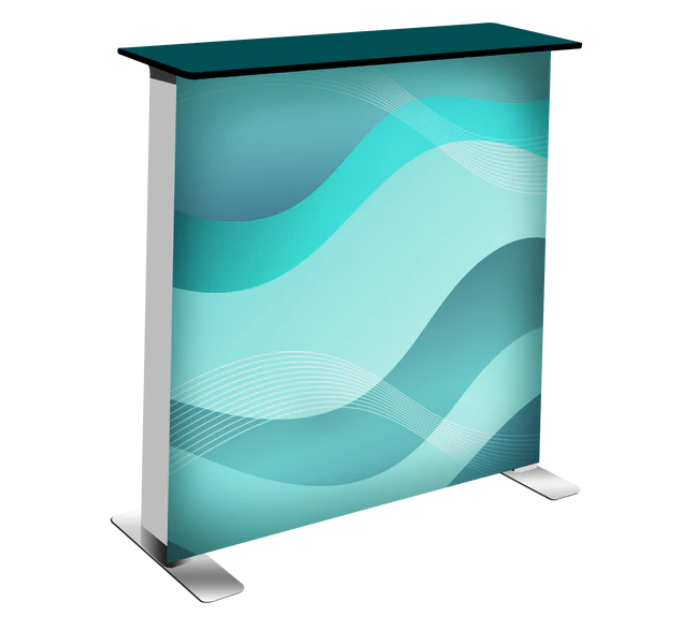
Main types of portable counters used in exhibits
1. Tension fabric portable counters
A tension fabric portable counter is one of the most common entry-level solutions. These systems are lightweight, easy to transport, and simple to assemble, making them ideal for exhibitors who need fast setup and teardown while still maintaining a clean branded presence.
Most portable counters in this category include basic internal storage space, although they are not intended for heavy equipment or secure storage. Their primary focus is convenience and portability rather than structural strength.
2. SEG extrusion portable counters
SEG extrusion portable counters provide:
improved stability compared to fabric-only systems
cleaner, tighter graphic presentation
better top-load support for light demo equipment
optional cable management and USB integration
a more polished, premium appearance overall
Some SEG portable counter systems include locking fabric doors, but even these are not intended to function as high-security storage solutions. Mobility still remains the primary purpose of the system.
3. Pop-up / hard-case portable counters
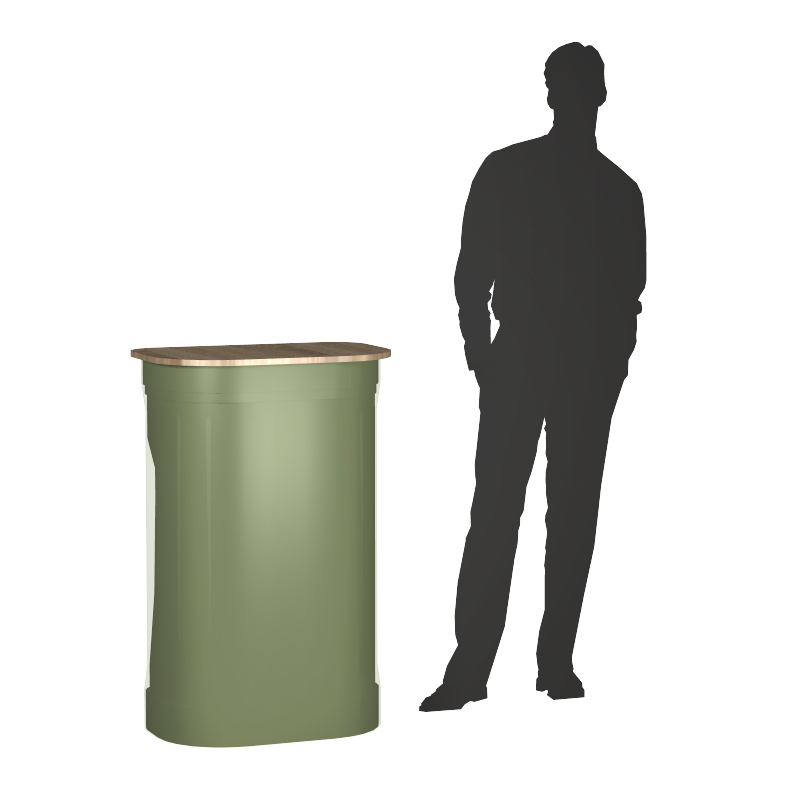
Pop-up portable counters are designed specifically around travel efficiency. They are commonly used for roadshows, touring exhibit programs, and events where displays need to be packed quickly and transported frequently.
Many of these systems double as shipping cases, allowing them to fit easily into vehicles, freight shipments, or courier transport. The tradeoff is that they generally do not provide the same premium finish or structural feel as more rigid SEG or custom-built counters.
4. Backlit portable counters
Backlit portable counters are best suited for:
high visual impact within busy exhibit spaces
stronger branded presence from a distance
premium-looking portable exhibit environments
illuminated graphics and attention-grabbing displays
However, they also typically involve:
reduced or eliminated internal storage
additional electrical planning
more careful packing and transport requirements
The biggest misconception about portable counters
One of the most common misunderstandings is assuming all portable counters offer meaningful storage or security.
In reality, most portable counter systems are designed around portability first. Storage is usually light-duty, security is limited, and heavier or valuable items are generally not appropriate for standard portable systems.
The functionality can vary significantly between fabric counters, SEG systems, and custom-built solutions. Once operational demands, weight capacity, or security requirements increase, the solution often moves beyond a traditional portable counter into custom fabrication.
Why packing matters more than most people realize
Key considerations when transporting portable counters include:
how the portable counter is packed and protected
whether it will be hand-carried or shipped via courier
risk of damage to graphics, frames, or connectors
repeat travel wear over multiple events
how efficiently the system fits into vehicles or freight cases
A portable counter system needs to perform not only on the show floor, but also throughout repeated transportation cycles.
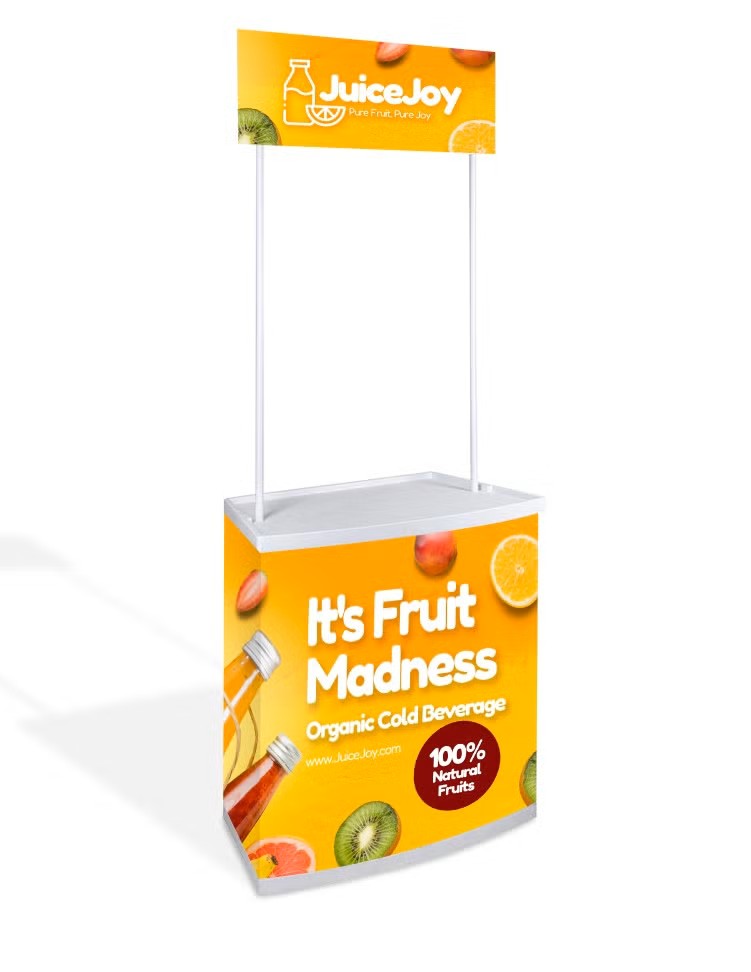
When a portable counter becomes custom
The shift away from portable counters usually happens as exhibit programs become larger or more demanding.
Portable counters work best when speed, portability, and simplicity are the primary goals. They are ideal for controlled budgets, lightweight travel programs, and setups that need to remain easy to manage.
Custom solutions become more appropriate once exhibitors begin incorporating heavier equipment, premium architectural finishes, secure storage, or long-term branded environments. At that point, the operational demands often exceed what a standard portable counter was designed to handle.
Stability and finish differences in portable counters
Portable counters prioritize:
lightweight transport
fast setup and teardown
flexibility across multiple shows
compact packing and shipping efficiency
Custom counters prioritize:
structural rigidity
premium finishes
long-term durability
integrated functionality
heavier load-bearing capability
A portable counter will not match the weight, stability, or finish quality of a fully custom-built counter, but that is simply part of the design tradeoff between mobility and permanence.
Simple decision framework for choosing a portable counter
When selecting a portable counter, the decision should always begin with three core considerations.
First is portability: how often the counter will travel and who will be responsible for setup and teardown.
Second is functionality: whether the counter is strictly for branding or whether it needs to support demonstrations, storage, or equipment.
Third is budget and long-term scope: whether the goal is minimizing upfront cost or investing in a system designed for years of repeated use.
Once these factors are clearly defined, the right portable counter solution becomes much easier to identify.
Real-world portable counter recommendations
10x10 booths: Lightweight SEG or fabric portable counters for speed and space efficiency
Roadshows: Hard-case or pop-up portable counters for travel durability
Lightweight travel programs: Minimal fabric portable counters focused on portability
Premium portable setups: SEG extrusion portable counters with upgraded finishes and lighting
Product demo environments: Reinforced portable counters with load-bearing capability and cable management
Cost-balanced programs: Fabric or entry-level SEG portable counter systems before moving into custom builds
Final thought
The best portable counter is not defined by design alone - it is defined by how it performs under real travel, setup, and usage conditions.
Once you understand the scope of your exhibit program, choosing the right portable counter becomes less about appearance and more about function, portability, and long-term reliability.
Need help choosing the best portable counter for your next trade show or event? Contact the team at Westkey Xibita today!